
HOA and Condo Roof Replacement in Palm Beach County: What Boards Need to Know
September 16, 2026
•
Written By
Hermes Roofing
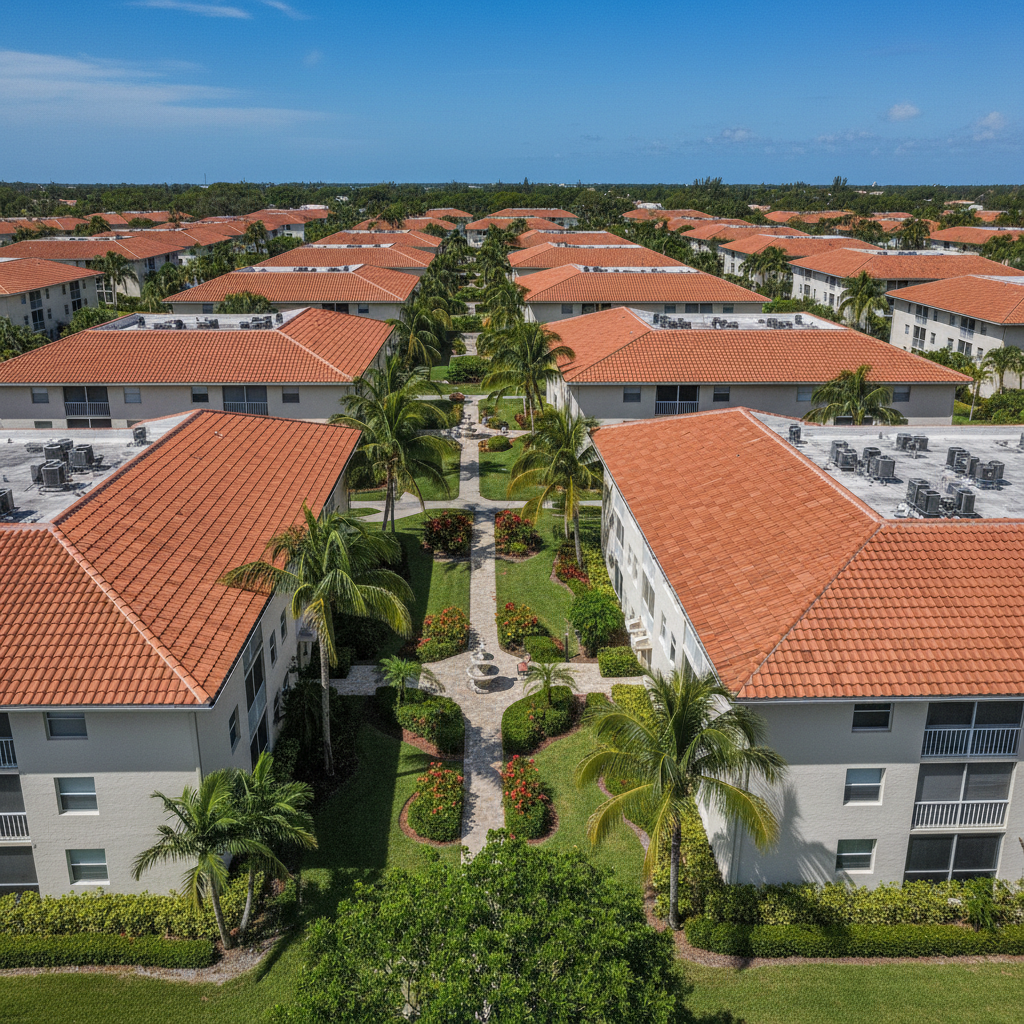
A roof replacement across an HOA or condo community involves board approval, resident communication, and phased scheduling that a single-family homeowner never has to think about. This guide walks Palm Beach County board members through the real process, from architectural review to final sign-off, so the project stays on schedule and on budget. Whether you're managing a single-building condo association or a large single-family HOA with dozens of homes, the same core planning steps apply.
Key Takeaways
- HOA and condo roof projects need architectural review approval before any material is ordered, and building that timeline in early avoids costly delays.
- Palm Beach County has dozens of tile-specific communities where the board's approved profile and color limits which product lines are eligible.
- Multi-unit and phased roofing typically costs more per building than single-family work due to logistics, but planning the phasing correctly controls that cost.
- A contractor experienced with board approvals and resident communication reduces friction significantly compared to one used to single-family jobs only.
Why HOA and Condo Roofing Is Different From a Single-Family Job
A single homeowner can pick a roofer, get a quote, and schedule installation within a couple of weeks. A community board has additional steps. These include architectural review committee approval, sometimes a resident vote depending on the community's governing documents, contractor vetting through the board's own procurement process, and coordination across multiple buildings or units if the project isn't a single structure.
None of that has to slow the project down significantly if the timeline accounts for it from the start. Where boards run into trouble is treating roofing like any other vendor decision and being surprised when architectural review adds weeks the original schedule didn't budget for.
Step 1: Confirm Your Community's Roofing Specifications
Most Palm Beach County HOAs and condo associations with tile roofs specify an exact tile profile and color in their governing documents, sometimes down to the manufacturer and product line. Before soliciting quotes, pull your community's architectural guidelines and confirm:
- Approved tile profile and color, or approved shingle style and color for non-tile communities
- Whether individual owners can deviate from the standard, which is common in single-family HOAs but rare in true condo associations with shared roofs
- Any material availability concerns if the approved product has been discontinued or is on manufacturer backorder, which happens more often than boards expect
Confirming this upfront prevents a scenario where a contractor orders material only to find it doesn't match what's approved.
Step 2: Get Quotes From Contractors With Real HOA Experience
A contractor's single-family roofing quality doesn't automatically translate to smooth HOA project management. When evaluating bids, ask specifically:
- How many HOA or condo roofing projects has the contractor completed in Palm Beach County in the last two years?
- Can they provide the architectural review documentation package boards typically request, without the board having to chase it down mid-approval?
- How do they handle phased scheduling across multiple buildings, if your community has more than one roof to replace?
- What is their plan for resident communication during installation, including parking, noise timing, and pet or child safety around equipment?
- Do they carry the commercial-grade insurance coverage most association management companies require for multi-unit work?
A contractor who answers these clearly and specifically has done this before. Vague answers are a sign the board should keep looking.
Step 3: Plan the Phasing and Budget
For communities with multiple buildings, phasing the replacement across a defined schedule, rather than attempting every roof at once, is usually both more affordable and less disruptive. A phased approach lets the board:
- Spread the cost across multiple budget cycles or special assessment periods instead of one large lump payment
- Give residents advance notice building by building instead of community-wide disruption all at once
- Catch and correct any issue with the first phase's workmanship before it repeats across every remaining building
The tradeoff is a longer overall project timeline, which boards should weigh against cash-flow needs and how urgently the current roofs need replacement.
Step 4: Understand What Drives HOA Roofing Costs
Multi-unit and HOA roofing costs are shaped by the same core factors as single-family roofing, material, roof size, and complexity, plus a few specific to shared or community property:
- Logistics and access: equipment staging, parking coordination, and access across shared property add cost that a single detached home doesn't incur
- Phasing overhead: mobilizing a crew multiple times across a phased schedule costs more in total than one continuous project, though it spreads the financial burden
- Insurance and bonding requirements: many management companies require higher liability coverage and bonding for multi-unit work than a typical residential job requires
- Code-required upgrades per building: Florida Building Code re-roof requirements apply per structure, so a community with several buildings sees these costs multiply accordingly
Boards should request an itemized, per-building breakdown rather than one lump community-wide number, so it's clear what's driving the total.
Step 5: Communicate the Timeline to Residents Early
Resident frustration during HOA roofing projects usually comes from surprise, not from the work itself. A short notice a few days before a crew shows up leads to complaints about noise and parking that a longer notice period would have avoided. Boards that share a realistic phase-by-phase calendar, including which buildings are affected and when, well in advance see meaningfully fewer complaints during the actual work.
Reserve Funding and Financing Options
Florida law requires condo and co-op buildings three or more habitable stories to maintain SIRS-based reserve funding for major structural components, including the roof, under Fla. Stat. 718.112(2)(g), following the reforms that followed the Surfside collapse. That requirement doesn't extend to single-family HOA communities, and current law includes some limited exceptions even for buildings that do qualify. If your community's reserve study shows the roof approaching replacement age, that funding requirement is one more reason to start planning now rather than waiting for a leak to force an emergency decision.
If reserve funds don't fully cover the project, or the board wants to avoid a large special assessment, financing options exist specifically for community association projects. Structuring a portion of the cost through financing while drawing down reserves for the rest can keep individual owner assessments more manageable. This is particularly true for a multi-building phased project spanning more than one budget cycle.
What Does a Typical HOA Roof Replacement Timeline Look Like?
For a single-building condo association, a straightforward re-roof usually runs from architectural review submission to completed installation in six to twelve weeks. The exact timing depends on how quickly the review committee responds and whether the specified material is readily available. Larger HOAs with multiple buildings and a deliberately phased schedule can see the full project span several months to over a year, by design. Phasing spreads the work and cost across more than one budget cycle.
Boards can shorten the front end of that timeline by pulling architectural guidelines and confirming material availability before soliciting bids. That's better than waiting until quotes are in hand to discover a specified tile profile is on manufacturer backorder. That single step alone often saves several weeks compared to boards that treat it as an afterthought.
Questions to Ask During the Architectural Review Process
Before your architectural review committee approves a roofing project, board members should be able to answer:
- Does the proposed material match what's specified in the governing documents, or does it require a documents amendment first?
- Has the contractor confirmed material availability, given that some specific tile profiles and colors face manufacturer backorders?
- What is the realistic timeline from approval to the first crew on-site, accounting for permitting?
- Is there a written phasing plan if the project spans multiple buildings, including which building goes first and why?
- What is the plan for resident communication at each phase, not just at project kickoff?
A contractor experienced with HOA work should be able to help the board answer most of these directly, rather than leaving the board to figure it out alone. Board members serving communities near West Palm Beach can expect the same architectural review fundamentals regardless of which specific municipality their community sits in.
Frequently Asked Questions
Do HOA and condo roof replacements require board approval before individual owners can act?
In true condo associations, the roof is typically shared property, so the board manages replacement directly rather than individual owners contracting separately. In single-family HOAs, individual owners usually contract their own replacement but must get architectural review approval for material and color first.
How much more does HOA or condo roofing cost compared to single-family?
Per-unit or per-building costs vary, but logistics, phasing, and higher insurance requirements typically add to the total compared to an equivalent single detached home. An itemized, per-building quote makes this transparent rather than a flat percentage assumption.
Can a board require a specific roofing contractor for all units?
In true condo associations with shared roofs, yes, since the board controls the shared structure directly. In single-family HOAs, boards typically set material and color requirements rather than mandating a specific contractor, though many recommend a vetted list.
How long does a multi-building HOA roofing project take?
This depends heavily on the number of buildings and whether the project is phased. A single building typically takes the same one to three days as a comparable single-family home; a multi-building phased project can span several months by design.
What happens if a resident's roof leaks during a phased community project?
A reputable contractor should have an emergency response plan for exactly this scenario, since phased timelines mean some buildings wait longer than others. Ask contractors directly how they handle an urgent leak on a building not yet scheduled for replacement.
If your board is planning a roof replacement, request a proposal that addresses architectural review, phasing, and per-building cost breakdown from the start.
Recent Articles
HOA and Condo Roof Replacement in Palm Beach County: What Boards Need to Know
September 16, 2026
How Much Does a Roof Replacement Cost in Palm Beach County in 2026?
September 9, 2026

What to Check Before You Sign a Florida Roofing Contract
August 25, 2026
How the Milestone Inspection Law Affects Your Condo Association's Roof Reserves
August 11, 2026