
How Much Does a Roof Replacement Cost in Palm Beach County in 2026?
September 9, 2026
•
Written By
Hermes Roofing
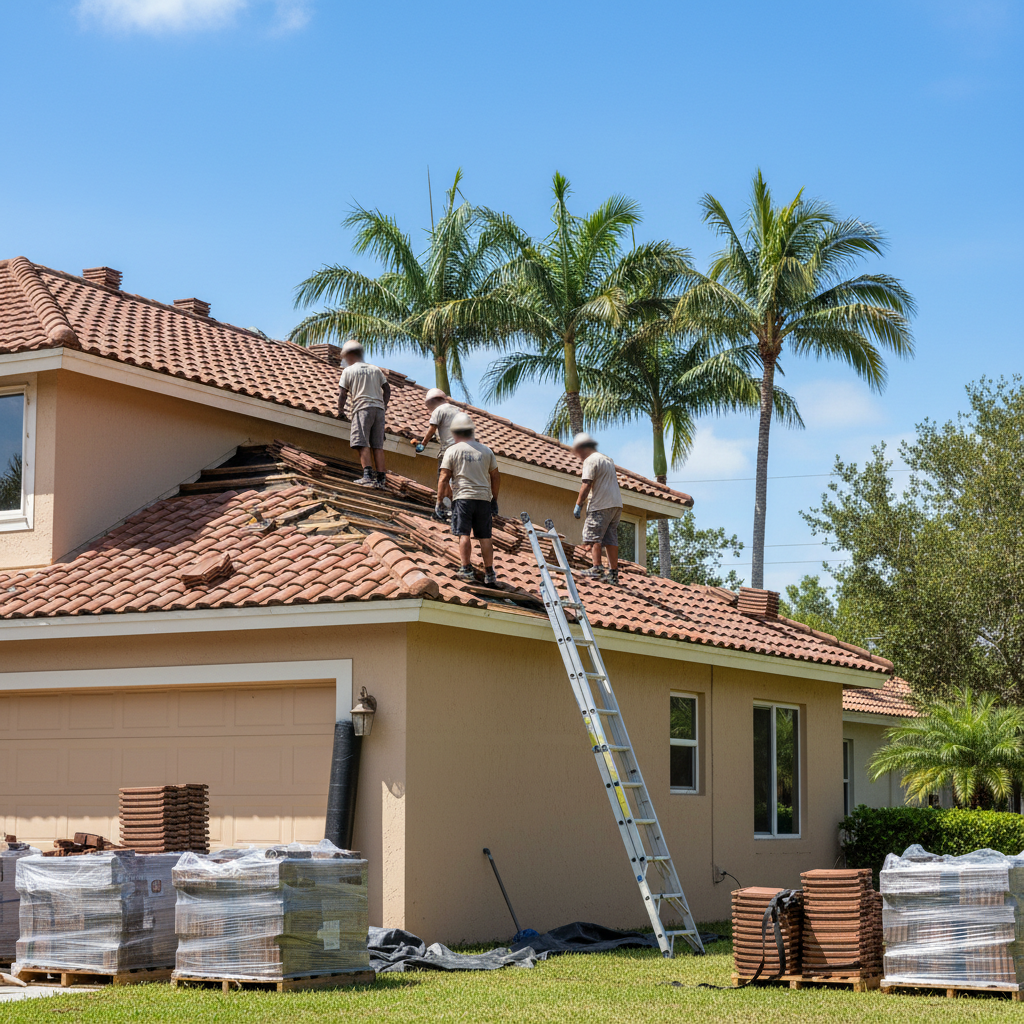
A full roof replacement in Palm Beach County in 2026 typically costs between $16,000 and $32,000 for a standard 2,000-square-foot single-family home. Entry-level architectural shingle systems occupy the lower end of this price range, while premium concrete tiles, Mediterranean clay tiles, and standing seam metal roofs reach the upper end and beyond.
Your final investment depends on roof size, pitch, material selection, structural wood deck repairs, and strict compliance with the Florida Building Code. Living in South Florida means your roof serves as the primary shield against relentless tropical sun, torrential downpours, and hurricane-force wind gusts. Investing in a fully code-compliant roofing system is a critical structural decision that protects property value, lowers insurance premiums, and ensures family safety.
This comprehensive 2026 guide breaks down exact material costs, hidden structural line items, Florida Building Code mandates, wind-mitigation insurance discounts, and actionable steps to evaluate contractor quotes across Palm Beach County.
Key Takeaways
- Average Investment Range: Full roof replacements in Palm Beach County range from $16,000 to $32,000 for standard single-family homes, with specialty metal and tile installations scaling up to $48,000 or more.
- Material Selection Drives Pricing: Material choice represents the single largest cost factor, ranging from $4.75 per square foot for architectural shingles to $24.00 or more per square foot for standing seam metal systems.
- Florida Building Code Upgrades: Mandatory structural upgrades under current Florida building standards, including self-adhered secondary water barriers and 8d ring-shank deck re-nailing, add upfront cost while unlocking major home insurance discounts.
- Permitting Is Mandatory: Every municipality across Palm Beach County enforces licensed permitting and multi-stage municipal inspections. Unpermitted roofing work invalidates insurance claims and creates municipal title liens.
- In-Person Inspection Required: Phone estimates or remote satellite measurements miss hidden sheathing rot and structural pitch complexities. Professional on-site inspections remain essential for accurate, itemized pricing.
2026 Roof Replacement Cost Breakdown by Material
Material choice dictates your project budget more than almost any other variable. The table below outlines real 2026 installed cost ranges for a typical 2,000-square-foot single-family home in Palm Beach County.
| Roofing Material | Average Total Cost Range (2,000 Sq Ft) | Installed Cost Per Sq Ft | Expected Lifespan | Wind Resistance Rating | Maintenance Demand |
|---|---|---|---|---|---|
| Architectural Shingle | $9,500 - $18,500 | $4.75 - $9.25 | 20 - 25 Years | Up to 130 MPH | Moderate |
| Concrete Tile | $22,000 - $40,000 | $11.00 - $20.00 | 30 - 50 Years | Up to 150+ MPH | Low to Moderate |
| Clay Tile | $28,000 - $52,000 | $14.00 - $26.00 | 50+ Years | Up to 150+ MPH | Low |
| Standing Seam Metal | $21,000 - $48,000 | $10.50 - $24.00 | 40 - 70 Years | Up to 160+ MPH | Low |
| Flat / Low-Slope (TPO / Mod-Bit) | $10,000 - $22,000 | $5.00 - $11.00 | 15 - 25 Years | Up to 130+ MPH | Moderate |
Architectural Shingles ($9,500 - $18,500)
Architectural asphalt shingles represent the most common choice for residential re-roofing across suburban Palm Beach County. Modern dimensional shingles offer enhanced structural depth, multi-tone color options, and high-wind performance warranties when installed with proper starter strips and six-nail patterns per manufacturer specification.
Manufacturers typically offer both 25-year and 30-year architectural shingle lines at different price points, and the gap between them is smaller than most homeowners expect. See our side-by-side look at 25-year vs. 30-year shingles before you lock in a material choice.
While budget-friendly upfront, shingle systems absorb significant solar heat during South Florida summers. Ensuring proper attic ventilation is critical to prevent thermal degradation and keep your air conditioning bills under control.
Concrete and Clay Tile ($22,000 - $52,000)
Tile roofing dominates master-planned developments, historic districts, and coastal communities throughout South Florida. Concrete tiles offer exceptional impact resistance and structural durability at a lower cost than clay. Barrel and S-profile clay tiles provide authentic Mediterranean styling, superior thermal insulation, and total resistance to salt air corrosion.
While concrete and clay tiles can last 50 years or longer, the underlying water barrier membrane beneath them degrades faster under intense Florida heat. Most tile roofs require a systematic underlayment replacement, often called a lift-and-relay, every 18 to 22 years.
Standing Seam Metal Roofing ($21,000 - $48,000)
Standing seam metal roofing delivers unmatched structural performance against severe weather, tropical storms, and hurricane force winds. Unlike exposed-fastener corrugated metal panels, standing seam systems feature concealed fasteners protected beneath interlocking mechanical seams. This design eliminates leak points caused by thermal expansion and degraded rubber washers.
Galvalume steel and aluminum panels reflect solar radiation effectively, cutting attic heat transfer dramatically. Metal roofs carry a higher upfront cost among standard residential materials, yet they provide the lowest annualized cost over a 50-year building lifecycle.
Flat and Low-Slope Roof Membranes ($10,000 - $22,000)
Many South Florida homes feature low-slope additions, modern flat architectural sections, or covered lanais. Standard shingles or tiles cannot shed standing water on surfaces with pitches under 2:12. Low-slope sections require specialized single-ply TPO (Thermoplastic Polyolefin) membranes or multi-ply SBS modified bitumen systems with self-adhered cap sheets to ensure watertight performance.
For comprehensive exterior protection across all architectural styles, partner with a certified local contractor like Hermes Roofing.
The Hidden Line Items: Anatomy of a Roofing Estimate
When comparing quotes from local contractors, remember that the outer roofing material represents only a portion of the total project expenditure. A comprehensive residential roof replacement quote includes several critical structural components that determine your final investment.
Key Takeaway: Always request an itemized bid that breaks down tear-off costs, wood deck replacement unit pricing per sheet, underlayment specifications, flashing materials, and municipal permit fees. Lump-sum figures often conceal lower quality materials or unexpected change orders.
1. Roof Size, Pitch, and Architectural Complexity
Roofers measure surface area in roofing squares, where one square equals 100 square feet of surface area. A 2,000-square-foot home footprint often translates to 2,200 to 2,600 square feet of actual roof surface due to overhangs, pitch angles, and gables. Steeply pitched roofs require specialized rigging, harness tie-offs, and slower material handling, increasing labor hours significantly.
2. Roof Tear-Off and Waste Disposal
Removing existing roofing layers down to the structural plywood sheathing generates thousands of pounds of heavy waste. In Palm Beach County, commercial disposal fees, staging equipment, container rentals, and ground protection tarps represent an essential part of total project labor.
3. Structural Plywood Decking Repair and Re-Nailing
Once the old roof is removed, crews inspect the structural wood deck for rot, water damage, and structural soft spots. Replacing damaged 5/8-inch exterior-grade plywood or OSB sheathing is billed per sheet, typically ranging from $85 to $125 per panel including labor. Furthermore, Florida code mandates that crews re-nail the existing plywood deck to roof trusses using 8d ring-shank nails placed at 6-inch intervals along sheet edges.
4. Secondary Water Barrier (SWB) Underlayment
The underlayment serves as your secondary line of defense against severe storm driven rain. Traditional 30-pound felt paper has been replaced by high-performance synthetic underlayments and self-adhered modified bitumen peel-and-stick membranes. Applying a full peel-and-stick membrane directly to the wooden deck satisfies Florida Building Code requirements for a secondary water barrier, preventing leaks even if outer shingles or tiles blow away.
5. Flashing, Drip Edge, and Valley Metal
Water intrusion frequently occurs at roof transitions, wall intersections, plumbing stacks, and chimney perimeters. Code-compliant installations require new corrosion-resistant drip edge metal along eaves and rakes, step flashing along sidewalls, custom pipe boots, and heavy-gauge valley metal in roof intersections.
6. Attic Ventilation Infrastructure
Inadequate attic ventilation traps superheated air reaching 150 degrees Fahrenheit during Florida summer afternoons. Excess attic heat bakes roofing materials from below, shortens shingle lifespan, and forces your HVAC system to run continuously. A properly engineered system balances intake soffit vents with continuous ridge vents or off-ridge exhaust vents to lower indoor temperatures and energy demand.
To explore full system integration including matching gutters, windows, and doors, review our full suite of exterior protection services.
Florida Building Code Mandates and Insurance Mitigation Credits
Every roof replacement across South Florida must strictly adhere to current state standards maintained by the Florida Building Commission. Florida enforces rigorous residential building codes to ensure structures withstand extreme wind pressure and driving rainfall.
Mandatory Building Code Upgrades
- Roof-to-Deck Fastening: Plywood sheathing must be secured using 8d ring-shank nails at 6-inch on-center spacing, doubling the holding capacity of older staple or smooth-nail patterns.
- Secondary Water Barrier (SWB): Installers must apply a self-adhering polymer-modified bitumen membrane over all deck seams or across the entire roof surface.
- Drip Edge Requirements: Metal drip edges must overlap eave edges by a minimum of 2 inches, extend at least 1.5 inches onto the deck, and be fastened at 4-inch intervals.
- Product Approval Numbers (FL #): Every roofing material, fastener, and underlayment must carry an active Florida Product Approval or Miami-Dade Notice of Acceptance (NOA) rating proving high-wind compliance.
Converting Code Upgrades into Homeowners Insurance Savings
While code-mandated upgrades increase upfront installation costs, they provide substantial ongoing financial returns through lower homeowners insurance premiums. Under state regulations overseen by the Florida Office of Insurance Regulation, insurance carriers must offer premium credits for documented wind-loss mitigation features.
Upon completing your re-roof, your contractor provides a completed Uniform Mitigation Verification Inspection Form (OIR-B1-1802). Delivering this completed inspection form with official photos to your insurance provider can unlock substantial savings on the windstorm portion of your property insurance policy:
- Deck Attachment Credits: Upgrading to 8d ring-shank nails at 6-inch spacing reduces wind-uplift risk rating.
- Secondary Water Barrier Credits: Verified peel-and-stick underlayment installation qualifies for major secondary water barrier discounts.
- Roof Covering Credits: Installing class-A impact-resistant shingles, concrete tile, or standing seam metal qualifies for maximum roof shape and covering credits.
Regional Price Drivers Across Palm Beach County
While overall material pricing remains consistent across South Florida, local geography influences total contractor pricing:
The Coastal Corridor (Boca Raton, Delray Beach, Palm Beach, Singer Island, Jupiter)
Homes located along the Atlantic coast face exposure to salt air, high humidity, and maximum wind-speed design criteria. Contractors operating in coastal zones utilize stainless steel fasteners, heavy-gauge aluminum or copper drip edges, and premium self-adhered membranes designed for corrosive environments. Additionally, tight property lines and parking constraints in coastal neighborhoods increase material staging logistics.
Central Urban and Suburban Neighborhoods (West Palm Beach, Lake Worth Beach, Greenacres)
Urban and suburban residential lots offer straightforward access for material delivery trucks and tear-off dumpsters. However, older homes built prior to 1995 in these communities often require additional wood sheathing repairs and structural rafter reinforcement to meet current Florida Building Code uplift requirements.
Western Communities (Loxahatchee, Wellington, Royal Palm Beach)
Homes in western Palm Beach County often feature larger floor plans, complex multi-gable rooflines, and expansive detached structures. While lot size allows for easier material staging and equipment access, total project costs reflect the larger surface square footage and custom architectural details.
To learn more about local craftsmanship and service standards in your area, read about our local team.
Repair vs. Replacement Decision Framework
Not every leaking roof requires a complete replacement. A dependable local contractor evaluates your roof structure objectively to determine whether a targeted repair or a complete re-roof represents the most cost-effective solution long term.
When Roof Repair Is the Right Choice
- Age Under 12 Years: The roof system is well within its expected operating lifespan and overall underlayment integrity remains strong.
- Localized Damage: Leaks are isolated to a single flashing detail, missing ridge shingle, or damaged plumbing vent boot.
- Intact Underlayment: The secondary water barrier underneath outer tiles or shingles shows no signs of widespread deterioration.
When Full Roof Replacement Is Necessary
- Age Exceeding 18 to 20 Years: Asphalt shingle or low-slope membrane systems near or past their design lifespan suffer from widespread material degradation.
- Broad Underlayment Failure: Water leaks manifest in multiple interior rooms simultaneously, indicating systemic underlayment breakdown beneath outer tiles or shingles.
- Widespread Granule Loss: Asphalt shingles display bare fiberglass backing with heavy granule accumulation clogging gutters and downspouts.
- Structural Sagging: Rooflines show visible dipping or sagging along rafter lines, signaling rotten plywood deck panels and structural wood decay.
- The 50% Repair Rule: Cumulative repair costs exceed half the cost of a complete system replacement over a three-year period.
The Palm Beach County Permitting and Inspection Lifecycle
Executing a legal roof replacement requires active building permits issued by local municipal authorities or the Palm Beach County Planning, Zoning & Building Department.
Skipping official building permits creates severe legal and financial risks for homeowners. Unpermitted roof work leads to municipal code enforcement liens, invalidates home insurance coverage during storm events, and halts real estate transactions during buyer title searches. Always verify that your contractor pulls official building permits under their corporate license before work begins.
If your home belongs to a Homeowners Association (HOA), verify architectural committee guidelines prior to selecting shingle colors or tile profiles. Many HOAs enforce pre-approved material libraries to maintain neighborhood uniformity.
Financing Options & Insurance Claim Realities
A roof replacement represents a substantial capital expense that does not always coincide with personal financial timelines.
Out-of-Pocket Financing
Flexible financing solutions allow homeowners to break major project expenses into affordable monthly payments. Many options feature zero-down-payment plans, low interest rates, and predictable repayment schedules, preserving cash reserves while securing immediate home protection.
Navigating Insurance Claims
If your roof suffers verifiable windstorm damage or hail impact during tropical weather events, property insurance policies may cover replacement costs minus your designated hurricane deductible. Legislative reforms under Florida Senate Bill 2-A updated claims procedures and assignment of benefits rules. Homeowners should document damage promptly, maintain detailed service records, and consult qualified insurance adjusters alongside certified roofing professionals.
Contractor Vetting Checklist: Protecting Your Investment
Selecting the right contractor is just as critical as choosing quality materials. Avoid common high-pressure sales tactics by following this evaluation checklist:
- Verify Florida State Licensing: Confirm active Certified Roofing Contractor (CCC) licensing on the Florida Department of Business and Professional Regulation portal.
- Confirm Active Insurance: Require direct proof of General Liability insurance and complete Worker's Compensation coverage for all crew members on your property.
- Demand Itemized Estimates: Refuse vague lump-sum quotes. Require explicit breakdowns for materials, labor, permit fees, and wood replacement unit pricing.
- Check Factory Certifications: Choose contractors carrying manufacturer certifications (such as GAF Certified or Polyglass Registered status), which unlock extended non-prorated system warranties.
- Reject High-Pressure Tactics: Avoid companies demanding full upfront payment or offering "today-only" discount pricing immediately following storm events.
Ready for an honest, professional assessment of your roof condition? Contact us today to schedule a free in-person evaluation.
Frequently Asked Questions
How much does a 2,000-square-foot roof replacement cost in Palm Beach County?
A standard 2,000-square-foot roof replacement in Palm Beach County in 2026 generally costs between $9,500 and $18,500 for architectural shingles, $22,000 and $40,000 for concrete tile, $28,000 and $52,000 for clay tile, and $21,000 and $48,000 for standing seam metal. Final costs depend on roof slope, architectural complexity, and structural deck repairs.
How long does a typical roof replacement project take to complete?
Most residential roof replacements take between two and four working days to complete once materials are delivered and permits are issued. Asphalt shingle installs often finish in one to two days, whereas concrete and clay tile installations require extra time for underlayment curing, batten layout, and tile interlocking.
Will a new roof lower my Palm Beach County homeowners insurance rates?
Yes. Installing a code-compliant roof with a self-adhered secondary water barrier, 8d ring-shank deck re-nailing, and impact-resistant materials qualifies your home for wind mitigation credits under Florida law. Homeowners often save between 15% and 40% on their windstorm insurance premiums after submitting an updated wind mitigation inspection form.
What happens if rotted wood decking is discovered after tear-off?
During old roof removal, hidden wood rot or water-damaged sheathing may be uncovered. Your contractor will document damaged panels, remove rotted sections, and install new exterior-grade structural plywood according to unit pricing clearly outlined in your initial project contract.
Can I install a new roof over my existing shingles or tile?
No. Current Florida Building Code regulations prohibit overlaying new roofing materials over existing layers in residential applications. Complete tear-off down to the bare wooden deck is required to verify deck structural integrity, re-nail sheathing, and install code-mandated secondary water barrier underlayments.
Recent Articles
HOA and Condo Roof Replacement in Palm Beach County: Strategic Guide for Association Boards
September 16, 2026
How Much Does a Roof Replacement Cost in Palm Beach County in 2026?
September 9, 2026
What to Check Before You Sign a Florida Roofing Contract
August 25, 2026
How the Milestone Inspection Law Affects Your Condo Association's Roof Reserves
August 11, 2026